
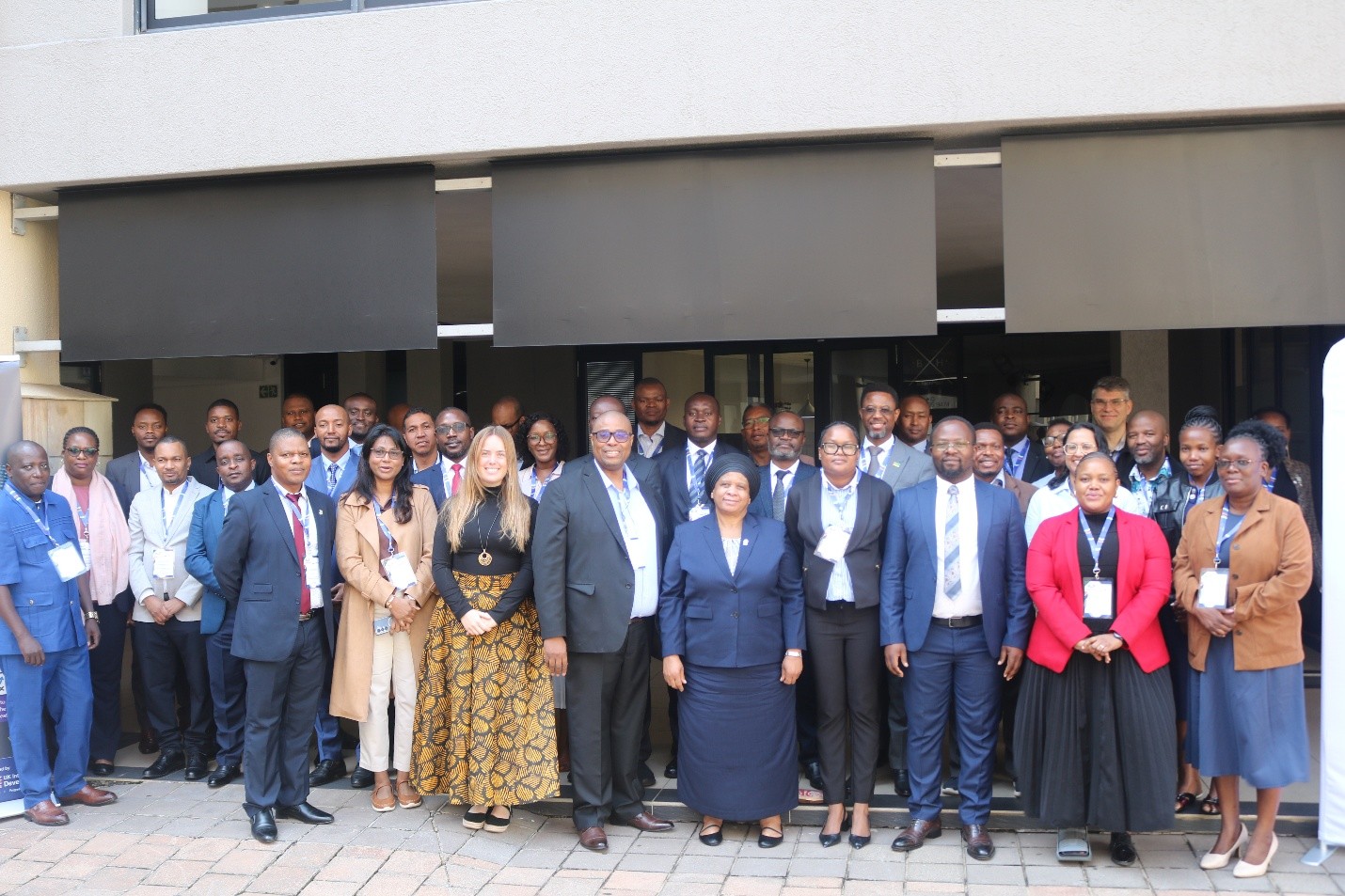
The Southern African Development Community (SADC) Climate Services Centre (CSC) and the SADC Humanitarian and Emergency Operations Centre (SHOC) participated in the Regional Coordination High-Level Session on Strengthening Early Warning Systems in Southern Africa, held in Durban, South Africa, from 8 to 9 September 2026. The high-level meeting was convened by the World Meteorological Organization (WMO) in partnership with the United Kingdom (UK) Met Office through the WISER ActionFirst™ Programme, bringing together regional meteorological centres, disaster risk management institutions, National Meteorological and Hydrological Services (NMHSs), Regional Economic Communities (RECs), and development partners to strengthen regional coordination for weather, water, and climate services.
The workshop was organized against the backdrop of increasing exposure across Southern Africa to climate- and weather-related hazards, including floods, droughts, tropical cyclones, and heatwaves. Participants examined ways to improve institutional coordination and operational collaboration to enhance preparedness, anticipatory action, and disaster response in line with the Early Warnings for All (EW4All) initiative and other regional and global frameworks.
The participation of the SADC CSC and SHOC reaffirmed the SADC Secretariat's commitment to strengthening regional multi-hazard early warning systems and ensuring that climate and weather information is effectively translated into timely preparedness and response actions. As key regional institutions, the CSC and SHOC continue to play complementary roles in monitoring hazards, coordinating disaster preparedness, supporting Member States, and facilitating the delivery of climate services that safeguard lives, livelihoods, and socio-economic development across the region.
The workshop focused on enhancing coordination among WMO-designated Regional Climate Centres (RCCs), Regional Specialised Meteorological Centres (RSMCs), Regional Instrument Centres (RICs), Regional Training Centres (RTCs), National Meteorological and Hydrological Services, and regional Disaster Risk Management institutions. Discussions centered on clarifying institutional roles under the WMO Integrated Processing and Prediction System (WIPPS), strengthening collaboration to support impact-based forecasting and warning services, promoting digital interoperability and identifying opportunities to accelerate the implementation of the Early Warnings for All initiative.
The meeting further explored practical measures to strengthen technical cooperation among regional centres, improve support to Member States, promote information sharing on emerging technologies and digital transformation, and establish more effective coordination mechanisms across the regional early warning value chain.
The Director of the SHOC Mr. Anderson Banda, and the Senior Programme Officer – Meteorology at the SADC Climate Services Centre, Ms. Surekha Ramessur, reaffirmed the SHOC’s and CSC’s commitment to working closely with WMO, National Meteorological and Hydrological Services, Regional Climate Centres, National Disaster Management Authorities, and other stakeholders to strengthen regional resilience and ensure that timely, accurate, and actionable early warning information reaches population most at need.


